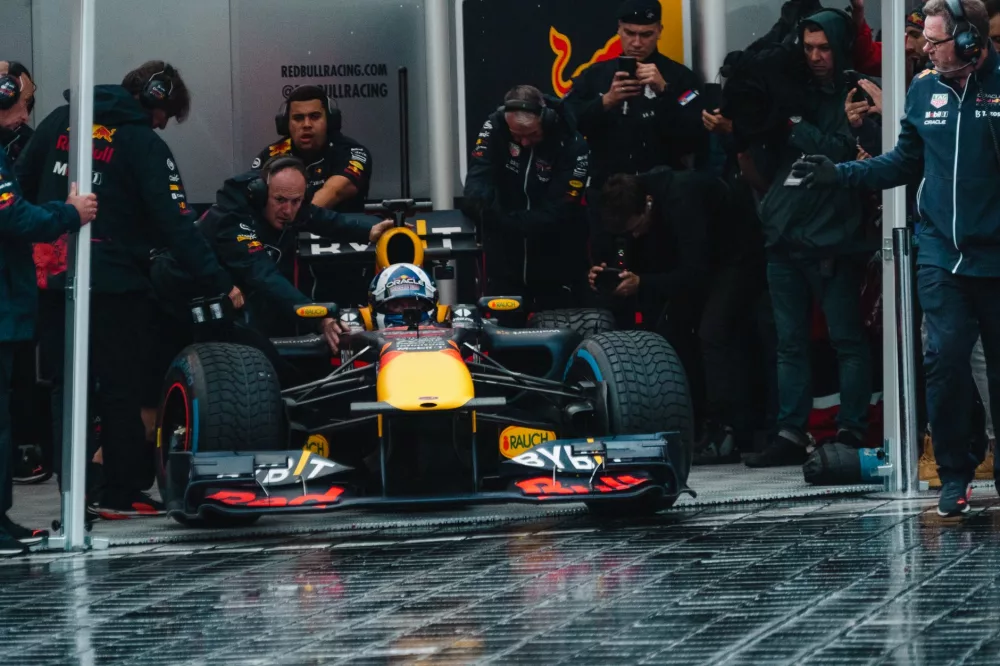
When we talk about Formula 1, names like Ferrari, McLaren, Mercedes, and more recently, Red Bull, immediately spring to mind. We think of the legendary drivers, the iconic cars, and the exhilarating races. But behind every successful team, there's often a figure, sometimes less visible to the casual fan, whose influence shapes its very destiny. For Red Bull Racing, that individual is unequivocally Dr. Helmut Marko. He's not just an advisor; he's the strategic mastermind, the sharp-eyed talent scout, and the uncompromising taskmaster who built a dynasty from the ground up. I find his journey from aspiring racer to kingmaker truly fascinating.
From Driver's Seat to Boardroom: Marko's Early Days
Before his ubiquitous presence in the Red Bull garage, Helmut Marko was a racing driver himself. Born in Graz, Austria, in 1943, he competed in various categories, even making it to Formula 1 in the early 1970s. He drove for teams like BRM, competing against contemporaries like Niki Lauda, a close friend from his youth. My understanding is he was a decent, quick driver, but his career, unfortunately, took an abrupt and tragic turn.
During the 1972 French Grand Prix at Clermont-Ferrand, a stone flung from another car pierced his visor, causing permanent damage to his left eye. This devastating accident ended his driving career right then and there. It's a cruel twist of fate, isn't it? One moment you're chasing your dream at the pinnacle of motorsport, the next, it's snatched away. But as we often see, sometimes one door closing just means another, perhaps more significant, one opens.
The Genesis of a Talent Spotter
After his racing career ended, Marko didn't just walk away from motorsport. Oh no, that's not his style. He earned a doctorate in law, which speaks volumes about his sharp intellect. This academic background, combined with his firsthand racing experience, gave him a unique perspective. He established his own racing team, RSM Marko, in the junior categories, notably Formula 3000. It was here, I believe, that his innate ability to identify raw talent began to truly flourish.
- He learned to spot not just speed, but potential.
- He understood the psychological demands of racing.
- He started to build a reputation for nurturing young drivers.
This period laid the groundwork for his eventual, much larger role.
The Red Bull Era: Building an Empire
His connection with Dietrich Mateschitz, the founder of Red Bull, runs deep, going back to their school days. When Mateschitz decided to invest heavily in motorsport, particularly with a junior driver program, he knew exactly who to call. Marko was the natural choice to head the Red Bull Junior Team, and frankly, it's one of the most impactful decisions in modern F1 history.
The Red Bull Junior Team isn't just a simple academy; it's a brutal, high-pressure proving ground. Marko's philosophy has always been clear: find the best, push them to their limits, and if they don't perform, they're out. It's a meritocracy of the highest order, often criticized for its ruthlessness, but undeniably effective. He doesn't sugarcoat anything; his feedback is direct, sometimes brutally honest, but always aimed at eliciting peak performance. I've heard drivers describe him as a demanding parent – tough love, but ultimately for your own good.
The Marko Method: Success Stories and Controversies
Just look at the results. The list of drivers who have come through the Red Bull pipeline under Marko's watchful eye is nothing short of incredible:
- Sebastian Vettel: Four-time World Champion with Red Bull Racing.
- Max Verstappen: Multiple World Champion, widely considered one of the greatest talents ever.
- Daniel Ricciardo: Multiple Grand Prix winner, known for his infectious personality.
- Carlos Sainz Jr.: Highly respected driver, Grand Prix winner.
- Pierre Gasly & Alex Albon: Both Grand Prix winners or podium finishers, proving their mettle.
The system works, plain and simple. It's a pipeline that consistently feeds talent into both Red Bull Racing and its sister team, AlphaTauri (formerly Toro Rosso). But it hasn't been without its controversies. Marko is known for his incredibly candid remarks to the press, sometimes offering harsh assessments of his drivers or rivals. These comments often make headlines, stirring up conversations. However, I believe they are often a calculated move, or simply his unvarnished opinion, reflecting his desire for absolute excellence.
A Legacy Defined by Vision and Unyielding Standards
Helmut Marko's influence extends far beyond just driver development. He's a key strategic advisor within the entire Red Bull motorsport empire. He plays a crucial role in team management, technical direction, and even the hiring of key personnel. His close relationship with Mateschitz meant he was a trusted confidant, able to shape the team's identity and direction. Now, in a post-Mateschitz era, his presence continues to be a stabilizing and guiding force.
What stands out to me most about Marko is his unwavering commitment to winning. It's an obsession, really. He isn't interested in second best; he expects excellence, always. This mindset, ingrained into the very fabric of Red Bull Racing, is a significant reason for their sustained success. He's not afraid to make tough decisions, to shake things up, or to take a gamble on an unproven talent if he sees that spark. That kind of conviction is rare in any sport, let alone one as high-stakes as Formula 1.
In summary, while the drivers get the glory and the engineers build the machines, it's figures like Helmut Marko who lay the very foundation for triumph. He's a complex, often polarizing character, but his legacy as an architect of champions and a driving force behind Red Bull's formidable presence in Formula 1 is undeniable. He's a legend in his own right, and his story shows us the power of clear vision and relentless pursuit of greatness.